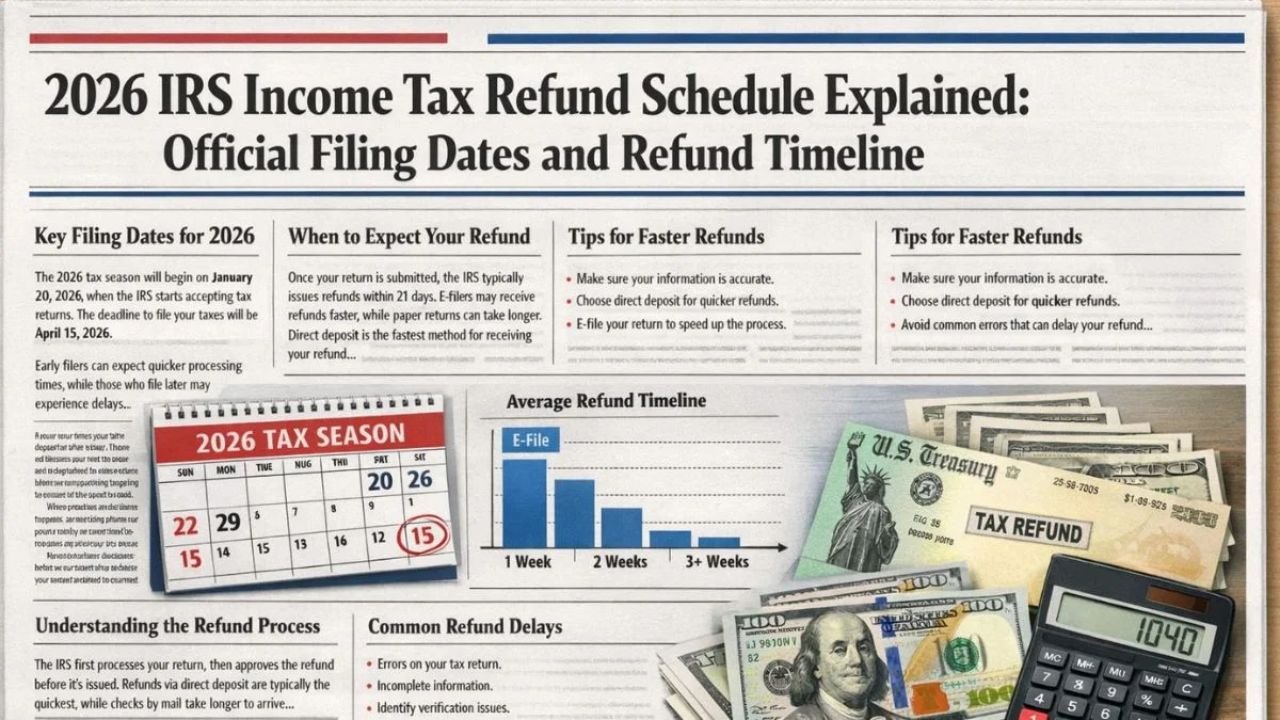
Tax season is a pivotal period for millions of Americans, and 2026 is no exception. Understanding the IRS income tax refund schedule, filing deadlines, and refund processing timeline can help taxpayers plan their finances efficiently and avoid unnecessary stress. From electronic filing to paper returns, knowing what to expect ensures a smoother tax season and quicker access to refunds.
Start of the 2026 Tax Filing Season
The IRS typically opens the tax season after completing system updates, security checks, and policy adjustments. For 2026, the IRS is expected to begin accepting individual federal income tax returns in late January. Filing early has several advantages: it speeds up refund processing, reduces the risk of identity theft, and allows taxpayers to address any discrepancies or missing documents in a timely manner.

Electronic filing has become the preferred method due to its speed, accuracy, and security. Advanced IRS systems can efficiently process millions of returns, allowing early filers to receive refunds faster than those submitting paper forms.
Key Filing Deadlines for 2026
The standard deadline for filing federal income tax returns in 2026 is expected to be April 15, unless it falls on a weekend or federal holiday, in which case it shifts to the next business day. This deadline applies to all taxpayers, even those using deductions, credits, or complex financial records.
For individuals who require additional time, the IRS permits filing extensions, typically extending the deadline to mid-October. However, it’s crucial to note that an extension to file does not extend the time to pay any taxes owed. Payments must still be made by the original April deadline to avoid penalties and interest.
Refund Processing in 2026

Refunds are among the most anticipated aspects of tax season. For electronically filed, error-free returns, the IRS generally issues refunds within three weeks. Returns submitted early in the season benefit from lower filing volumes, resulting in faster processing.
Paper returns, however, take significantly longer due to manual handling and seasonal backlogs. Additional verification may also be required for returns claiming credits like the Earned Income Tax Credit (EITC) or Child Tax Credit, which can temporarily delay refunds. These safeguards protect taxpayer funds but may extend the processing timeline.
Typical Refund Timeline
Refund timing depends heavily on when the return is submitted:
- Early filers (late January–February): Refunds typically arrive by early to mid-February, assuming no errors or verification requirements.
- Mid-season filers (March–early April): Expect a turnaround of three to four weeks, as this period represents peak filing volume.
- Late filers (just before the April deadline): Refunds may take four to six weeks or longer if additional review is necessary.

Understanding your filing window helps set realistic expectations for when refunds will arrive.
Direct Deposit vs. Paper Checks
The method of receiving your refund significantly impacts timing:
- Direct deposit: Fastest, safest, and most convenient. Funds are transferred directly to your bank account within days of approval.
- Paper checks: Slower due to printing, mailing, and potential postal delays. Weather, address errors, or sorting issues can further extend delivery time.
For taxpayers relying on refunds for essential expenses, direct deposit is strongly recommended.
Tracking Your Refund
The IRS provides the “Where’s My Refund?” tool, which allows taxpayers to monitor the status of their refund in real time. Updates occur daily, showing milestones such as return received, refund approved, and refund sent.
Tax preparation software often integrates with IRS systems, offering seamless tracking for millions of Americans. Using these tools reduces uncertainty and provides confidence throughout the refund process.
Common Factors That May Delay Refunds
Even with electronic filing and direct deposit, some returns may face delays:
- Errors in personal information or missing signatures
- Mismatched data or incomplete forms
- Refundable credits requiring additional verification
- System upgrades, staffing limitations, or unusually high filing volumes
Careful review and preparation can minimize these delays. Filing electronically and choosing direct deposit are the most effective ways to ensure timely refunds.
Conclusion
The 2026 tax season highlights the importance of understanding the IRS income tax refund schedule. From the late-January filing opening to the April deadline, being informed about timelines, processing methods, and potential delays is essential for smooth financial planning. Early electronic filing, accurate submissions, and direct deposit usage maximize the likelihood of receiving refunds promptly. By staying organized and proactive, taxpayers can navigate tax season efficiently and enjoy the financial benefits of timely refunds.
FAQs
Q. What is the 2026 IRS refund schedule?
A. It outlines the official timeline for filing returns and when refunds are expected to be issued.
Q. When does the 2026 tax filing season start?
A. The IRS is expected to open e-filing in late January 2026.
Q. How long does it take to get a refund in 2026?
A. Most electronic returns with direct deposit are processed within approximately 21 days.
Q. Do paper returns take longer to process?
A. Yes, paper returns can take significantly longer due to manual handling and mailing delays.
Q. How can I track my refund status?
A. Use the IRS “Where’s My Refund?” tool or compatible tax preparation software for real-time updates.