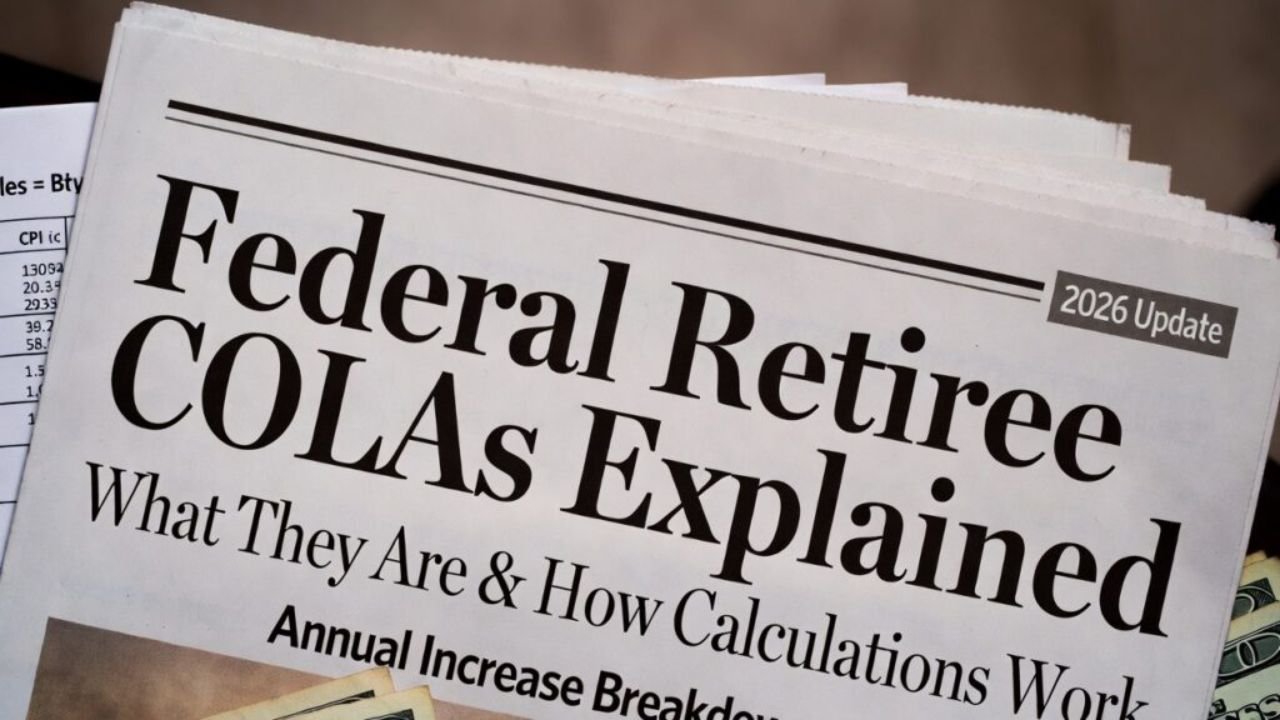
Rising inflation doesn’t stop when your career does. For federal retirees, maintaining purchasing power over decades of retirement is critical — and that’s where Cost-of-Living Adjustments (COLAs) come in. These annual increases are designed to help protect retirement income from being eroded by higher prices on essentials like housing, healthcare, and food.
Whether you retired under the Civil Service Retirement System (CSRS) or the Federal Employees Retirement System (FERS), understanding how COLAs are calculated — and when they apply — is essential for long-term financial planning. Here’s a clear, professional breakdown of how federal retiree COLAs work in 2026 and beyond.
What Is a Federal Retiree COLA?

A Cost-of-Living Adjustment (COLA) is an annual increase applied to certain federal retirement annuities to offset inflation. The goal is simple: ensure retirees can maintain their standard of living despite rising costs.
COLAs are tied to changes in the Consumer Price Index for Urban Wage Earners and Clerical Workers (CPI-W). Each year, the government compares inflation data from one period to the next and adjusts eligible annuities accordingly.
COLAs typically take effect on December 1 and appear in the January payment retirees receive.
How CSRS COLAs Are Calculated

Retirees under the Civil Service Retirement System (CSRS) receive full inflation-based adjustments.
Calculation Method
- Based on the percentage increase in the CPI-W
- Rounded to the nearest one-tenth of one percent
- Applied to the gross annuity before deductions
For example:
If the annual COLA is 5.9% and a retiree receives a gross monthly annuity of $5,100, the increase would raise the annuity to approximately $5,400 before deductions.

After the COLA is applied:
- Health insurance premiums
- Survivor benefit costs
- Tax withholdings
are deducted from the updated gross amount.
CSRS retirees receive the full CPI-based adjustment regardless of age.
First-Year COLA: Proration Rules Explained
New retirees do not automatically receive the full COLA in their first year.
Instead, the adjustment is prorated based on how many months they were retired before the first December 1 after retirement.
Example
If a retiree received annuity payments for 11 months before the December 1 COLA:
- They would receive 11/12 of the full COLA
This ensures fairness while aligning the adjustment with the time spent in retirement during that year.
Survivor and Children’s COLAs Under CSRS
COLAs also apply to survivor annuities and children’s benefits.
Survivor Annuities
- If the deceased retiree had already received a COLA, the survivor typically receives the full adjustment.
- If not, the survivor’s first COLA may be prorated.
Children’s Benefits
Children receiving survivor benefits under CSRS generally receive the full COLA, even in the first year. These adjustments are not prorated.
All increases are applied before deductions, ensuring inflation protection remains intact.
How FERS COLAs Differ from CSRS
Retirees under the Federal Employees Retirement System (FERS) follow slightly different rules.
Key Differences
- Age Requirement
Most FERS retirees do not receive COLAs until age 62. Exceptions include:- Disability retirees
- Special category employees (such as law enforcement or air traffic control)
- Modified Formula
FERS COLAs may be lower than CSRS adjustments.
If inflation is:
- 2% or less → FERS receives the full increase
- Between 2% and 3% → FERS receives 2%
- Above 3% → FERS receives CPI minus 1%
For example, if inflation is 5.9%:
- A CSRS retiree receives 5.9%
- A FERS retiree may receive 4.9%
“Trans FERS” Employees
Employees who transferred from CSRS to FERS may receive:
- A CSRS COLA on the CSRS portion (without age restriction)
- A FERS COLA on the FERS portion (subject to age rules)
Understanding this split is important for accurate income forecasting.
Why COLAs Matter for Long-Term Financial Planning
Over a 20–30 year retirement, inflation can significantly reduce purchasing power. Even moderate inflation compounds over time.
For example:
- A retiree receiving $4,500 monthly could see meaningful annual increases through COLAs.
- Without COLAs, the real value of income would steadily decline.
However, retirees should remember:
- COLAs apply to gross annuity amounts.
- Net income may vary depending on taxes and healthcare premium changes.
- FERS retirees under 62 may experience a temporary gap in inflation protection.
Strategic retirement planning should account for:
- Age-based COLA eligibility
- Healthcare cost growth
- Tax bracket shifts
- Survivor benefit planning
How to Verify Your COLA Adjustment
Each year, retirees receive official notification detailing their updated annuity amount.
Best practices include:
- Reviewing annual adjustment notices carefully
- Comparing new gross amounts to prior payments
- Confirming deduction changes
- Monitoring tax withholding updates
Keeping organized financial records ensures transparency and accuracy.
If discrepancies arise, retirees should contact their retirement service office or benefits administrator for clarification.
Final Thoughts: Inflation Protection Is a Long-Term Asset
Federal retiree COLAs are more than routine annual adjustments — they are a foundational element of retirement security. By aligning annuities with inflation, COLAs help preserve financial independence and lifestyle stability over time.
Understanding the differences between CSRS and FERS, knowing how proration works, and reviewing adjustments annually allows retirees to make informed financial decisions.
Retirement income planning doesn’t end when you leave federal service. Staying informed about COLA mechanics ensures your annuity continues to work for you — year after year — in an evolving economic landscape.