Benjamin Franklin famously said that nothing is certain except death and taxes. While taxes are unavoidable, smart investors know one powerful secret: you can control when you pay them. That timing can make a big difference in how much wealth you build over time.
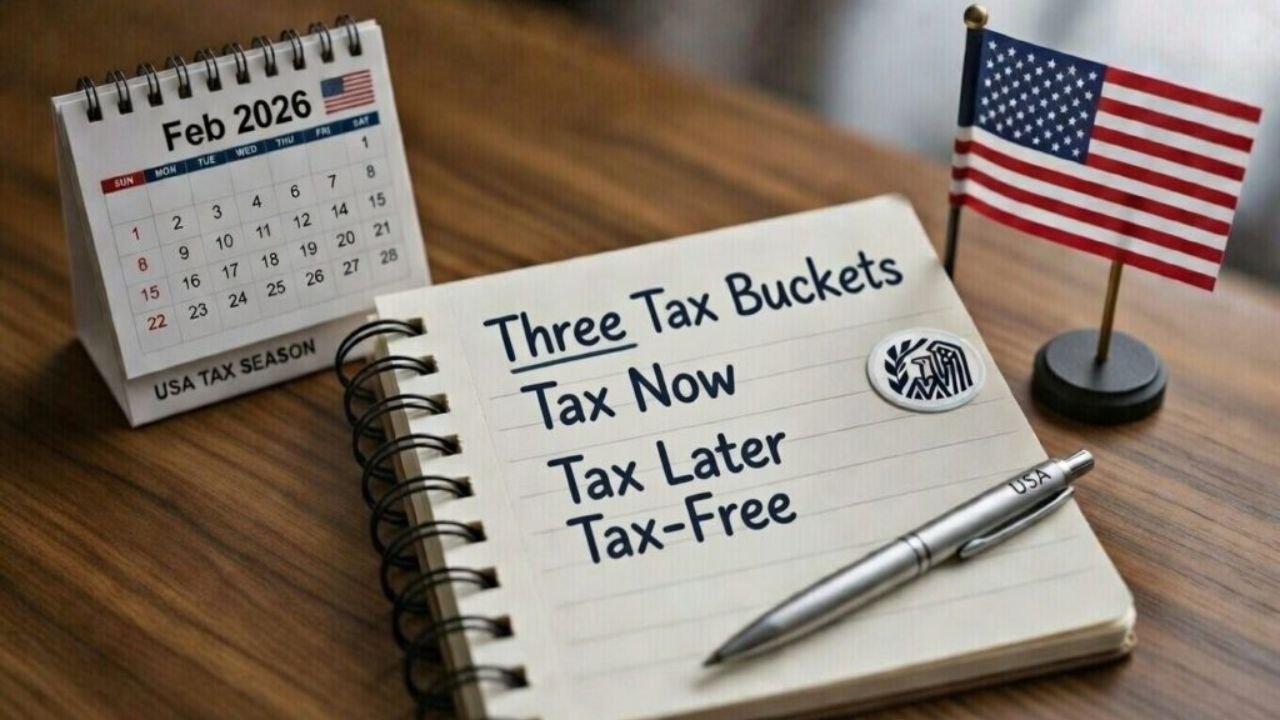
Financial experts often divide investments into three “tax buckets” — Tax Now, Tax Later, and Tax-Free. Understanding these categories can help you lower your lifetime tax bill, improve retirement income, and create a more flexible financial plan.

Let’s break it down in simple terms.
What Are the Three Tax Buckets?
The three tax buckets refer to how and when your investment money gets taxed:
- Tax Now – You pay taxes as you earn.
- Tax Later – You delay taxes until withdrawal.
- Tax-Free – You pay taxes upfront, but withdrawals are tax-free.
The key isn’t just what you invest in — it’s where you hold your investments.
Tax Now Bucket (Taxable Accounts)
How It Works

You invest using after-tax income, and any earnings (interest, dividends, or capital gains) are taxed in the year they’re earned.
Common Examples
- Savings accounts
- Fixed deposits
- Regular brokerage accounts
- Money market accounts
Key Features
- No upfront tax benefits
- Annual taxes on earnings
- High liquidity and flexibility
Best For
- Emergency funds
- Short-term goals
- Easily accessible savings
Pros
- No withdrawal restrictions
- Simple structure
Cons
- Slower compounding due to yearly taxes
Tax Later Bucket (Tax-Deferred Accounts)
How It Works

You contribute pre-tax income and delay paying taxes until retirement withdrawals. Taxes apply to both your original contribution and investment growth.
Common Examples
- Traditional retirement accounts
- Employer-sponsored pension plans
- Certain government-backed retirement schemes
Key Features
- Immediate tax deduction
- Taxes paid at withdrawal
- Growth compounds tax-deferred
Best For
- High-income earners today
- Those expecting a lower tax bracket in retirement
Pros
- Reduces taxable income now
- Strong long-term growth potential
Cons
- Future tax rates are uncertain
- Mandatory withdrawal rules may apply
Tax-Free Bucket (Tax-Advantaged Accounts)
How It Works
You contribute money that has already been taxed. In return, qualified withdrawals — including growth — are tax-free.
Common Examples
- Roth-style retirement accounts
- Certain education savings plans
- Specific tax-free government bonds
Key Features
- No upfront deduction
- Tax-free growth
- Tax-free qualified withdrawals
Best For
- Younger investors
- Those expecting higher income in the future
Pros
- Powerful compounding advantage
- No tax surprises in retirement
Cons
- Contribution limits may apply
- Eligibility rules must be followed
Quick Comparison Table
| Feature | Tax Now | Tax Later | Tax-Free |
|---|---|---|---|
| Tax on Contributions | Already taxed | Pre-tax | Already taxed |
| Tax on Growth | Taxed yearly | Taxed at withdrawal | Tax-free |
| Withdrawal Rules | Flexible | Retirement rules apply | Rules apply |
| Best For | Short-term savings | Tax deferral strategy | Long-term wealth building |
Why Tax Diversification Matters
Relying on only one tax bucket can limit your flexibility. Smart retirement planning includes tax diversification, meaning you spread money across all three buckets.
This allows you to:
- Control taxable income in retirement
- Avoid jumping into higher tax brackets
- Handle unexpected expenses efficiently
- Reduce lifetime tax burden
For example, in a high-expense year, you could withdraw from a tax-free account to avoid increasing your taxable income.
Simple Strategy Tips
- Use taxable accounts for liquidity.
- Maximize tax-deferred contributions during peak earning years.
- Build tax-free assets early for retirement flexibility.
- Review tax laws annually to stay compliant.
Balanced planning can protect your wealth from unnecessary tax erosion.
Frequently Asked Questions (FAQs)
1. Which tax bucket is best?
There is no single “best” option. The right mix depends on your income, retirement goals, and expected future tax rate.
2. Should I focus only on tax-free accounts?
Not necessarily. Contribution limits and eligibility rules may prevent full reliance on tax-free options.
3. Are tax-deferred accounts risky?
They’re not risky, but future tax rates are uncertain, which can impact withdrawals.
4. Can I move money between tax buckets?
Some conversions are possible, but they may trigger taxes. Always check rules before transferring funds.
5. Why is tax diversification important?
It gives flexibility to manage income and reduce taxes during retirement.
Final Thoughts: Plan Smart, Not Just Hard
Investing isn’t only about returns — it’s about what you keep after taxes. Understanding the Tax Now, Tax Later, and Tax-Free strategy can help you build a more efficient and retirement-ready portfolio.
Instead of focusing only on investment performance, start thinking about tax positioning. A well-balanced tax strategy today could mean greater financial freedom tomorrow.
Before making major financial decisions, consider reviewing your plan with a qualified financial advisor to ensure your investments align with your long-term goals.